Fish Are Friends

I do not eat fish. I never have (knowingly) and I never will. As a child it was because I was a picky eater. As I have grown and my tastebuds have changed I now eat many things. Fish is still not on my menu.

There are so many things you can do to help the ocean recover from how much we have tortured it already. You can drive less, fly less, reduce your single use plastic, clean a beach, eat sustainably. A huge way you can “save the fishes” is to fish for yourself or not eat fish at all.

How did the old saying go? If you catch a man a fish he eats for a day, if you teach man to fish, we wont have any fisheries left by 2050?

Fishing used to be a way for people on coasts to get protein into their diets to sustain their communities. According to the WWF approximately 3 billion people rely on the ocean as their main source of protein.

Through out history we removed a bulk of the populations we have exploited for profit. Often when we think of sperm whale hunting, we imagine the 1800’s and the time of Moby Dick when Sperm Whales were hunted for their fat or sperm oil used as fuel. In reality Sperm Whale hunting peaked in the mid 1960’s when whaling numbers reached 250,000. Today it is estimated there are 360,000 left.

The Atlantic Cod Fish industry peaked in 1970’s where the “landings” were at around 800,000 tons according to the Millennium Ecosystem Assessment. The industry crashed in 1993 from overfishing. It’s estimated that there were approximately 3.4 trillion, and today it’s estimated that number has dropped by about 92% according to seaaroundus.org.

Goliath Grouper, a fish close to my heart, have been affected by overfishing. These giants can reach up to 800 pounds. Their populations have been reduced to critical numbers because of fishing and sport fishing. Sportfishing makes me cringe. It’s like nascar of depleting the oceans of important wildlife. “Sportfish” are 100% more valuable to us all alive. They are often set as the top down control for other fish populations. The balance the natural ecosystem has derived is critical to manage.
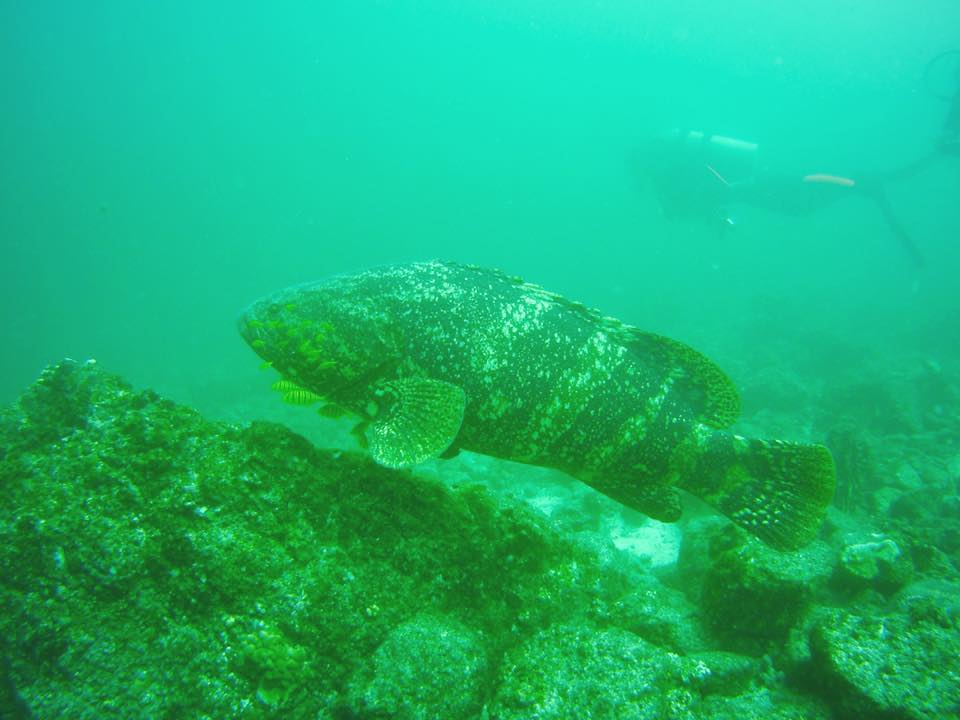
A Goliath Grouper that decided to follow me on a dive in Coiba National Park, Panama.

Oysters. If you’re eating oysters, they’re probably farmed. It’s been estimated that the natural oyster population has dropped 90%. This was due to overfishing. The Chesapeake bay is a great example of this problem. The oyster fishery was exploited for non-local consumption towards the mid 1800’s. The oysters were dredged, which is a practice we now know to be extremely damaging to environments. Todays oyster farming practices are something we should support for several reasons. Oysters act as a natural water filter which helps clear environments of otherwise damaging algae blooms. Check out this video of oysters cleaning water https://www.youtube.com/watch?v=saAy7GfLq4w As oysters are eaten, if you’re at a responsible restaurant or farm the shells are recycled. When collected and piled into reef like structures, the naturally occurring oyster population can colonize on the discarded shells, which helps the population regrow. For more information on oysters visit billionoysterproject.com

So if you love the ocean and you love to eat fish what are you supposed to do? There are so many good options out there for a person like you! First of all, always choose sustainable fisheries. This has been made so easy with Monterey Aquariums Seafood Watch program. They even have an app that works really well! seafoodwatch.org

One of the easiest pieces of advice I can give to those of you here in USA is to eat catfish! Fish are friends, we should let their wild populations get back to safe numbers and choose wisely.
Sunscreen

Summer is NOT over people. You can always use protection from the sun. What kind of sunscreen are you using? Whats in it? The first ingredient in most sunscreens is oxybenzone or avobenzone. Sunscreen is super important to keep your body safe from UV rays. A sunburn can ruin a vacation, and skin cancer can ruin lives. However, there are major downsides to using mainstream sunscreen.

These chemicals happen to stress out the symbiotic relationship between coral polyps and their zooxanthellae (dinoflagellate algae). For corals, the typical sunscreen makes the coral weak allowing for infections, bleaching, damage to offspring, and damage to DNA. It can also have major negative affects on fish and other marine life. Oxybenzone may also be disruptive to human hormones and could also possibly cause skin cancer.

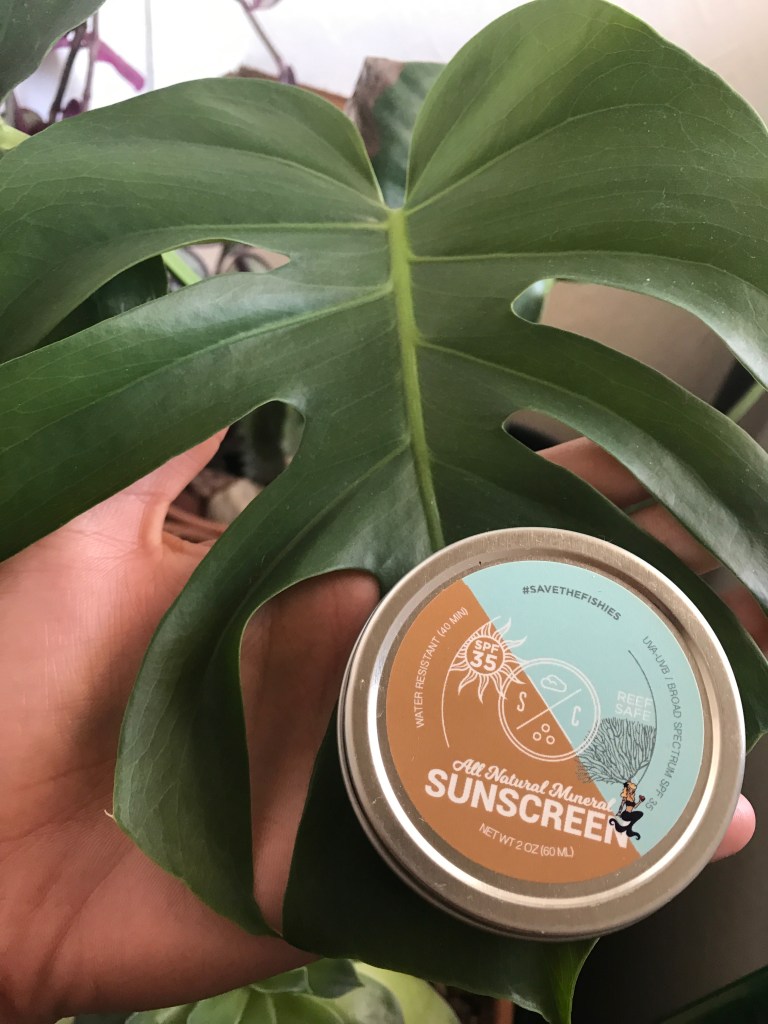
So what are we supposed to do? Option 1: Get sunburnt and potentially cancer from wearing no protection. Option 2: Risk causing problems in our own body and the ocean from wearing sunscreen. Or option 3! You can still do right by your body and the ocean by using sunscreen that is zinc or titanium based. Is it more expensive, harder to spread, and usually really white? Yes. Does it feel better long term? Hell yes! I found that combining my zinc based sunscreen with organic lotion or olive oil helps to spread it and get a nice even tan and protects my skin from the sun. There are options people, you may have to get creative and its totally worth it. You can also protect your skin and the ocean by using coverups, however those are usually made from plastic fibers that shed into the ocean and can also cause harm to its inhabitants.

Do the research, your body and your home are worth protecting.

This is the sunscreen I bought and have been using in the harsh Colorado sun plus it smells AMAZING https://www.sandcloud.com/collections/accessories-1/products/organic-reef-safe-sunscreen

La Plage

Firstly, yeah I haven’t posted in a few weeks. I was vacationing with my family in Canada. This post is about Canada and rivers. Read it or don’t!

Oh Canada. Let me set the scene for you. You’re standing on a dirt driveway. To your right a fiery sunset, to your left a purple sky with the moon rising. All around you are freshly cut fields, and a small brook is near by. Just down the driveway, a tattered cottage painted white with green trim. Years ago it was accompanied by a barn and a shed, I watched them both sag into the ground and disappear. All that’s left is a rusty detached garage roof that’s sheltering some junk. In the side yard reside a few apple trees that have gotten better with age, between two of them swings a netted hammock. All you hear are sounds of nature, the occasional cow orgasm, cars flying by on the road that was paved just 20 years ago and sometimes the wind carries friendly neighborhood chatter. Through out my life our family cottage in Canada has been a staple of my learning, growing and socializing experience. Now it represents a getaway spot. 

I’ve been making the trip up there since I was a baby. I started remembering things like fire, animals, neighbors and family experiences. What does this have to do with marine biology?! I’ll get there. Just enjoy the ride!

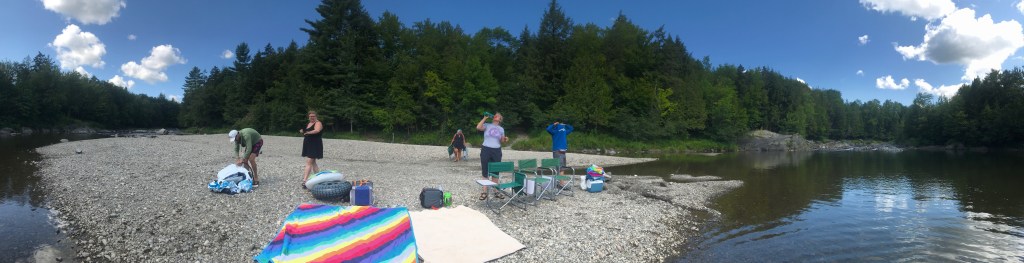
La Plage or the beach is where I handled a great deal of questions. This was no ocean fronted beach. This was a naturally accumulated pile of rocks in the middle of a river. You have to drive through the woods, past the blue rubber hosing used for tapping maple trees, then walk down an often slick muddy rocky hill before crossing a portion of the river to get to la plage. 

Super relaxing, eh?  La Plage is where I asked questions about geology, fluid mechanics, phycology, botany, mycology, all of the ologies were involved. This past week I revisited la Plage and understood the ecology aka the interactions between the biotic and abiotic worlds.

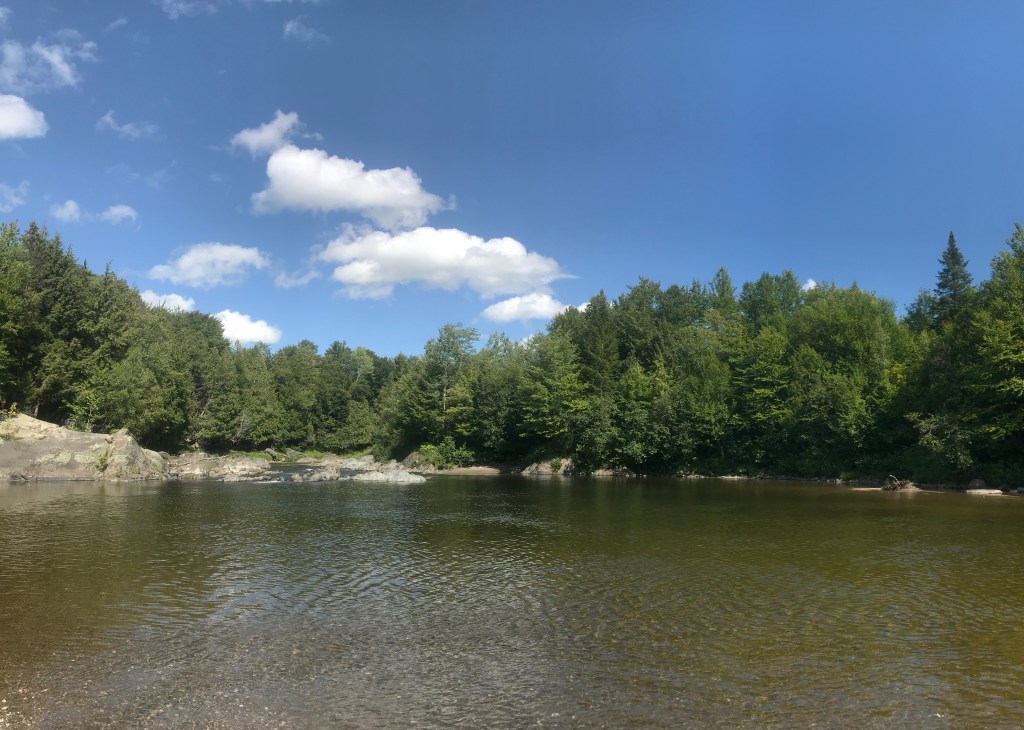
The portion of the river we hang out at is slow during the summer weeks. There is a rocky section the water cuts through before it opens up into “the pool”.  The water cuts around it on either side so it’s “the island”. It is composed of several rock types common to the north east of the continent like shale and granite. These rocks have eroded into small enough bits for us to lay on (uncomfortably but still). I learned about geology through play. You can have all sorts of fun playing with the rocks. You can skip them, crack them open, throw them, draw on them using other rocks as pencils, throw them at your siblings while they nap or use them for hot rock therapy! Through play I began to understand which ones were stronger, which ones broke easily and how the river processes them. Rivers are one avenue for minerals (from the rocks I played with) enter the ocean. It’s what makes the ocean “salty”.

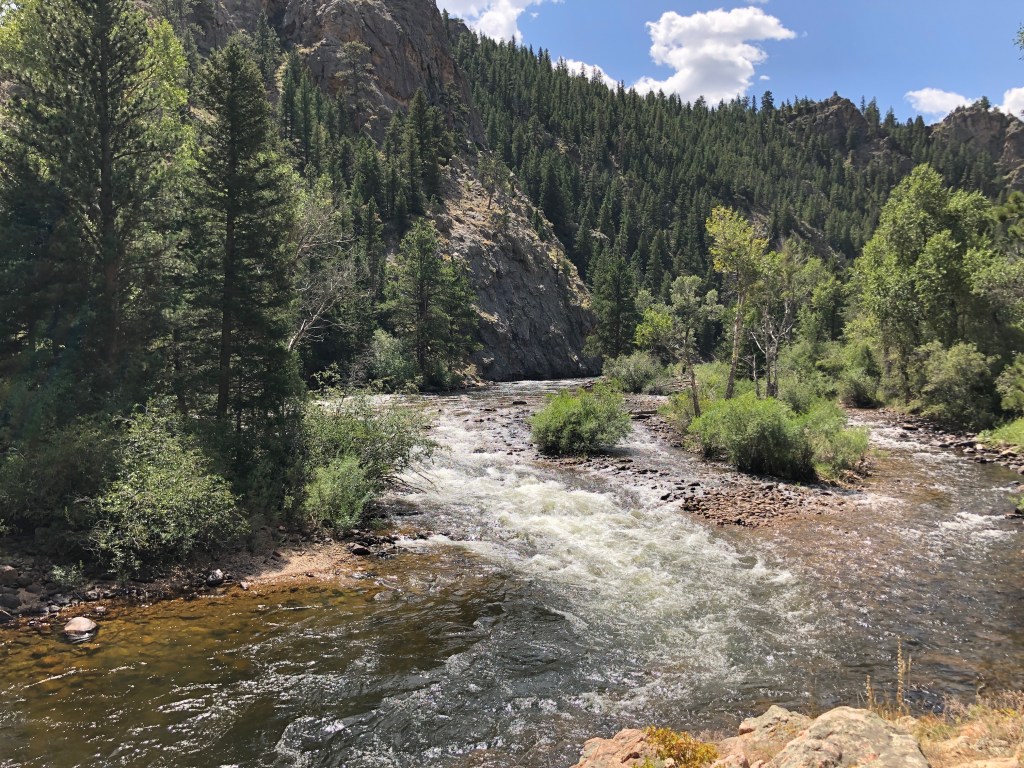
The ocean is the driving factor of the water cycle. Rivers play an enormous role in moving, distributing and filtering water. Rivers typically start high in mountains. As snow and rain fall the water collects and runs through earth. Small tributaries join into the main river and the main river eventually meets a lake or ocean. Rivers are a massive part of a healthy ocean ecosystem.

The Mississippi River, for example, runs through North American farmland and empties into the Gulf. As the Mississippi runs through the farmlands, the excess nutrients used to grow crops and the waste from livestock is carried tot he ocean. When those nutrients accumulate, it fertilizes the ocean and creates algae blooms. Huge, harmful algae blooms can cause so many problems. The reason the Gulf is at risk is because these blooms are happening more often and they’re getting bigger. As the algae blooms, it grows lives and then dies quickly. When it dies it creates a dead zone. Sucking the oxygen from the water. This leaves fish with out any oxygen, often killing them in apocalyptic amounts. The air above the water is compromised. Marine mammals and humans close to the bloom have difficulty breathing. Mammals who are unable to travel to clean air become sick and die. 

Rivers are the veins and arteries to the heart ocean. If we care for the ocean, the rivers need attention. Being in Canada, for vacation at la Plage reminded me how thankful for rivers we should be. We should be protecting them from dumping, nutrient offloading and pollution. 

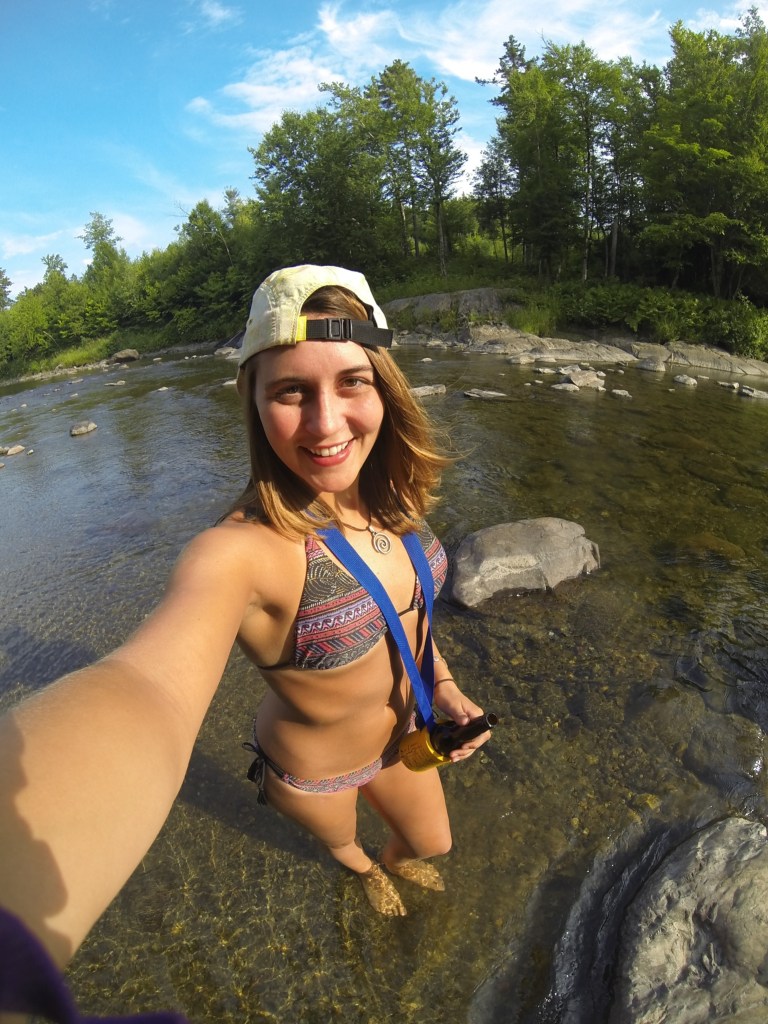
Being land locked in Denver has me feeling dried up with out the ocean. That’s why I visit rivers as much as possible. The cold water shocks my body. It reminds me how water connects us all. 

I made memories from water. Every type of water has shaped me into a scientist and protector of water. Water is life. Where there’s life, I’ve got questions, and I wanna know answers. It’s always nice to look at and to be in nature and water. I urge you to take your relationship with water to the next level. Ask questions, look deeper. Find the connections, and protect your water. 

Want to learn more about some river issues? Here’s a few links

http://action.healthygulf.org/our-work/protecting-water/dead-zone-and-mississippi-river

https://www.nrdc.org/stories/columbia-snake-river-basin-salmon-are-losing-their-way

Top 21 Most Polluted Rivers Around the World in 2023

Waters on Driftwood

“I am asked sometimes, how did you get to be a biologist? How did you get to be a scientist? How did you get to be an explorer? And I say, it’s really easy. You start out as a little kid, and then you never grow up.” -Sylvia Earle. This is my short story about growing up on driftwood drive, and how swimming and exploring my own ecosystem kept me a kid forever.

I don’t know if my life is full of coincidences or if the universe has given me a way to find a holistic approach to pursuing my passions. I was lucky enough to grow up only an hour or so away from a good beach. We would visit the beach no matter what time of the year. Some of my favorite memories are on a gray, wet, windy & cold New England beach. 

My sister Hannah who has the opposite feeling about being in the ocean.

My siblings and I share many traits, but I think curiosity was key in helping us excel in our personal interests. This is childish notion something that bonds us at the best of times when outdoors. Growing up a Waters, on a street called Driftwood I never thought twice about the little things that built the outer casing of my interests. It seems as though the universe poked and prodded me with blatant messages like my last name and my street name.

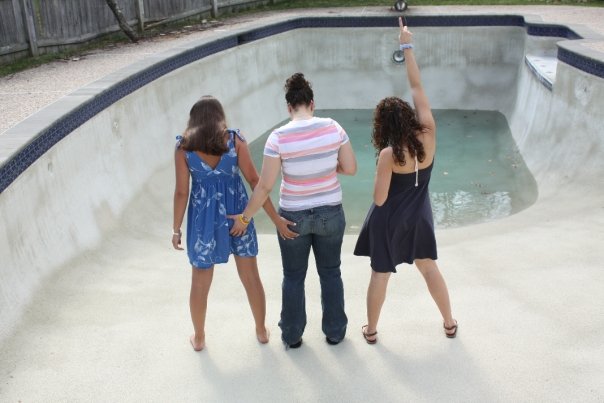
I shared a bedroom with my sister for most of my childhood it was above the kitchen and right next to the stairs. We had two windows, one overlooking the pool in the backyard and the other to the side of the house. My dream was (still is) to build a waterslide from my bedroom to the pool area. I would wake up in the summer time and see the warm golden glow of the sun filter through the trees. I would look out at the pool area stoked for another day outside.

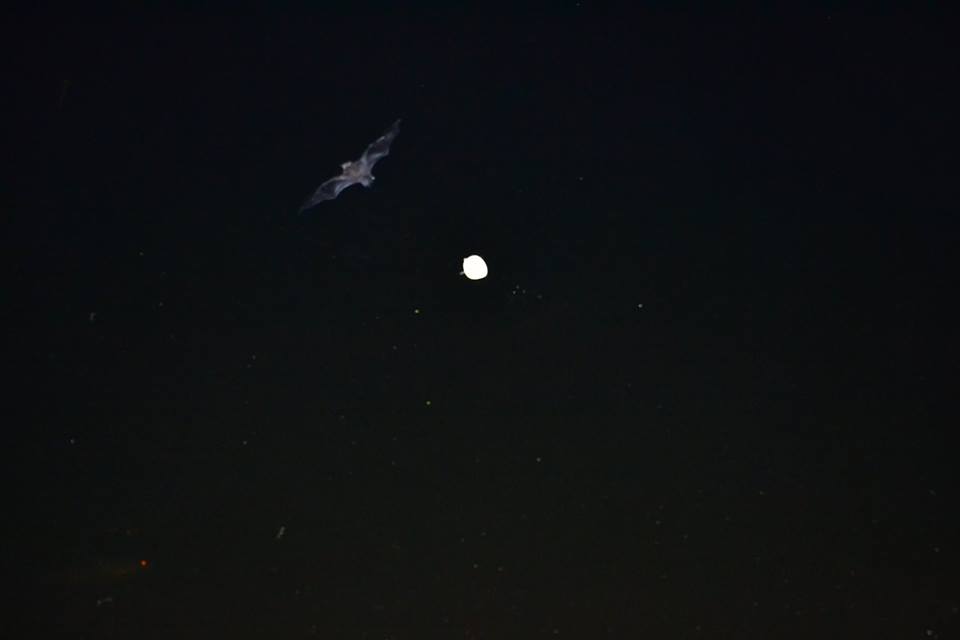
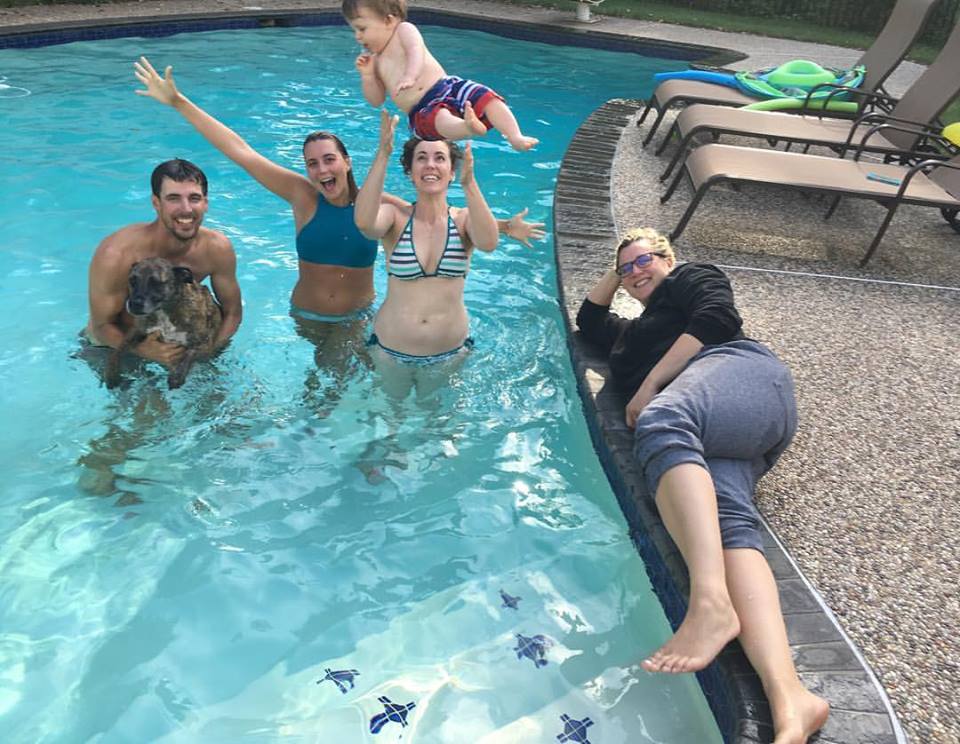
My dad and I opened the pool every spring. We would compete to see who could get in the pool first as a kind of unofficial game and signal to start summer. The water was where we bonded. We would be in there all day from when sun would rise to the darkness to watch stars and moon. At night bats would visit to eat the mosquitoes buzzing around our heads, we named them Luna who always flew in front of the moons light, splash who preferred bugs from the waters surface and spike the one who flew too close to your head. I loved those bats, and they never made me feel unsafe from swimming at night.

Bat uses the moonlight to capture bugs near the waters surface.

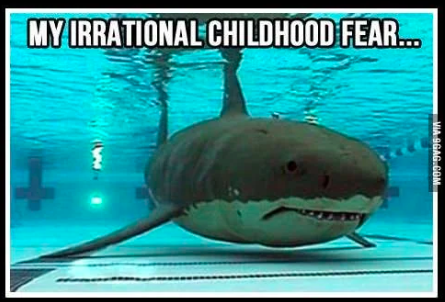
But do you ever remember those random fears like there would just be a shark in your pool? Yeah I had that a few times and my child brain couldn’t shake the image of a shark half the size of my pool coming to get me. It made me a faster swimmer hey! I quickly got over that, but I always had a chill on the back of my neck in the ocean.

So dumb but true.

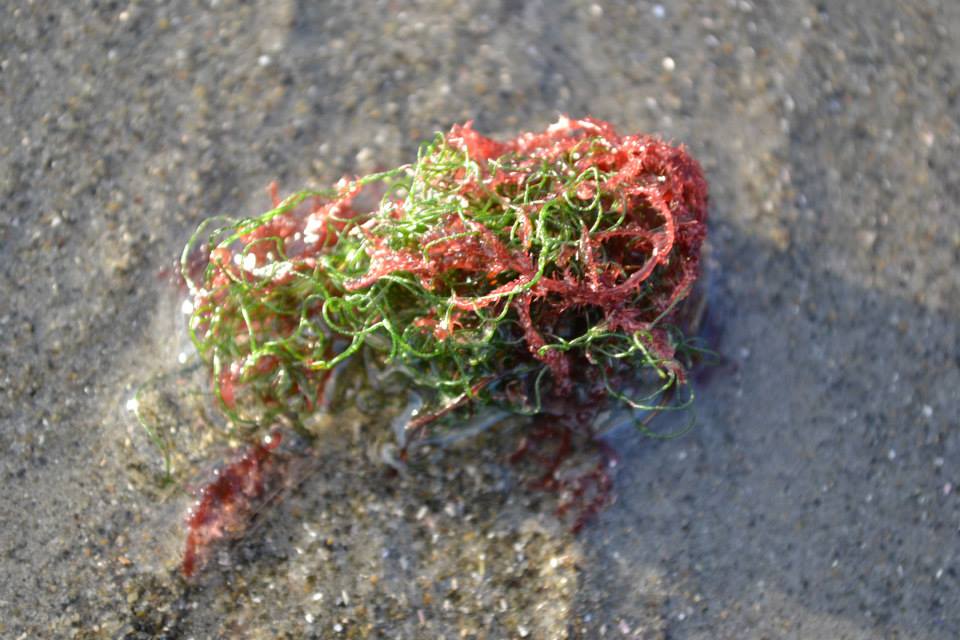
I had an extremely superficial fear of the ocean. I wasn’t afraid of any specific entity just the idea of the unknown. What was behind that next wave, what’s hiding in the sand beneath my feet? My confidence in swimming helped me overcome that fear and turn it into a quest. Instead of being afraid of asking what’s behind that next wave, I strapped on my mask and snorkel and I went to go find out for myself. I picked up every floating piece of sargassum with cupped hands to investigate who could be hiding within its tendrils. I turned fear into investigation and curiosity. As they say, ignorance leads to fear. I believe knowledge and understanding leads to love. Who do you know that F*king loves algae? ME. Thats who.

Love the wiry fuzzy algae. Theres always something cool hiding inside. Best seen with a microscope!

This confidence took time, was built on land and perfected at the seas edge. I used to do laps around my house barefoot, sometimes with my eyes closed to use my other senses. Along the route I was overturning rocks and looking inside the dead part of the Apple tree to see what I could find. I studied the major ant colonies, the molehills, flowers the bumblebees preferred and which birds to expect to see. I checked the pool area for frogs as they often leapt in to cool off. I would fish them out and put them back in the forest. I learned birds voices and their conversations. I knew when there was a hawk close by versus when the hawk was overhead because their conversations changed with the situation. We dissected animals we found dead in the yard and we would do our best to ensure sick or injured animals could recover.

My life has always been and always will be about animals. I am constantly asking questions about animals. My “need-to-know” attitude has kept me asking questions and turning some into hypothesis. This has helped my on my journey as a scientist. If you are trying to become a scientist, this is the advice I have for you: ask all the questions. Write them down. Find patterns and follow your gut.

I am thankful for my siblings in supporting my decisions and curiosities. You have helped me grow. If you even read these posts I love you and miss our outdoor adventures everyday.

La Jolla

California. *Sigh* my birthplace and more. My family would occasionally make a trip to visit the pacific. If you know me, you know that my memory is like a black hole and I remember next to nothing. But some light memories reach out from that black hole for me to recall. One year we were visiting during the Fourth of July. I left my brother Benjamin with my hard earned arcade prize, a plush Spongebob. He traded it for some almost dead glow sticks because some cute girls wanted the Spongebob. Now thats what I call the worst trade deal in the history of trade deals! I watched my sister Caitlin and Benjamin from the roof of our hotel on the grassy knoll spattered with trees that looked like they were from a Dr. Seuss story. My sister Hannah was always by my side usually fighting with me (oh how thats changed). I ate too many of the sugar cubes offered at roof top breakfast. I CONSTANTLY wanted to be closer to the water. I remember the steps taken down to the beach. Walking down the concrete stairway and around the corner finding bear sized sea lions lounging and barking. I can still smell the tide pools. I remember looking out on the dark blue and gray horizon, feeling spray of the waves giving me goosebumps and then hearing my mother *gasp* “MOLLY HELENA” and telling me to get away from the edge. I knew if I turned my back on the ocean, the ocean wouldn’t swallow me. I trusted her, but I listened to my mother. The few memories I hold from La Jolla are building blocks to why I became a marine biologist.

The most influential memory I have from La Jolla was of the first time I swam over very deep water. I think I was four years old. I found out I was not afflicted by thallasophobia. My dad and I brought out a waterproof disposable camera, and a bag of frozen peas and started snorkeling. I remember floating on the surface of the cold water. We were swarmed by giant bright orange Garibaldi fish as we fed them the frozen peas. Behind the orange fish I could feel the life blow us, hiding in the deep green-blue, pulsing through the kelp forest.

This must have been one of the founding moments of my fierce love and devotion for our oceans. I’ve only been to California a handful of times. The Pacific Ocean has a deep and strange affect on my soul. It’s constantly calling me to its cold, deep and lively waters. Like my own personal siren, she wails out for me to join it and explore its depths.

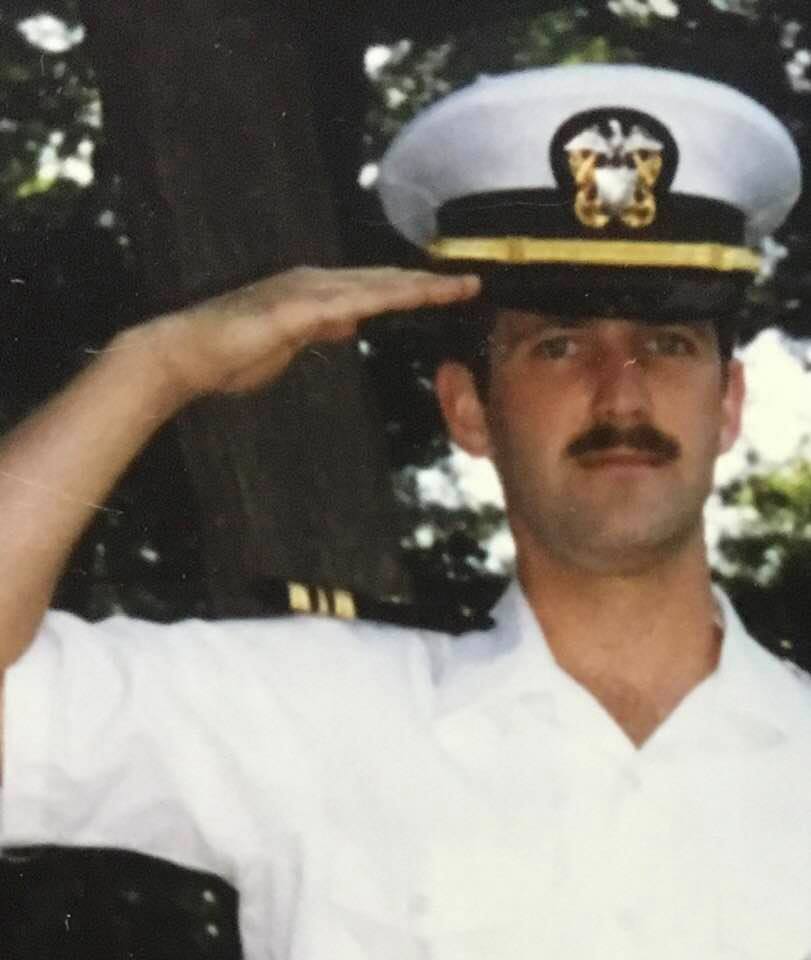
I was born in San Diego. I am the fourth child, Caitlin being the first, Ben the second and Hannah the third. My extended family is gigantic. To help you understand let me explain. My mothers side of the family has a family picnic every June. About 100 people are there every year! My fathers side is similar in size as he is one of 6 kids and my mother is one of 7 kids. They grew up on the same street a few houses away from each other and so my mother and father and aunts and uncles were very close for most of their younger years. This being said, most of the people I am closely related to were born in the same state, town and many in the same hospital. Except me. I’m what we like to call the San Diego Surprise! Whether I was an accident or not, I like the name. We were living in San Diego because my father was a cardiologist in the Navy. He was supposed to be deployed to Somalia, but when I was born the Navy allowed let him stay with his family and the San Diego Surprise.

Days after I was born from my mother, I was taken to the ocean. This is what I like to call my second birth, as in born from the ocean. I don’t remember that day, but the photos of me in my mothers arms, on a cliff by the sea are all the proof I need. The sun in my eyes and salty air touching my skin, and the sound of waves crashing then and there hit my soul. December of 1992 was where the Pacific first got a hold of me. It hasn’t let go. Living on the East Coast of New England didn’t change that either.

Plumb Island

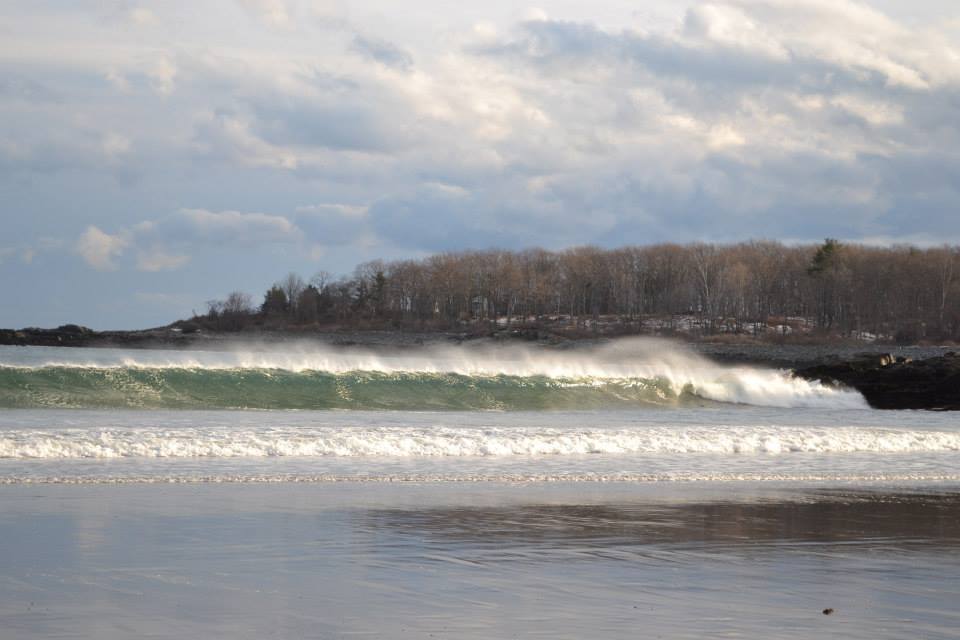
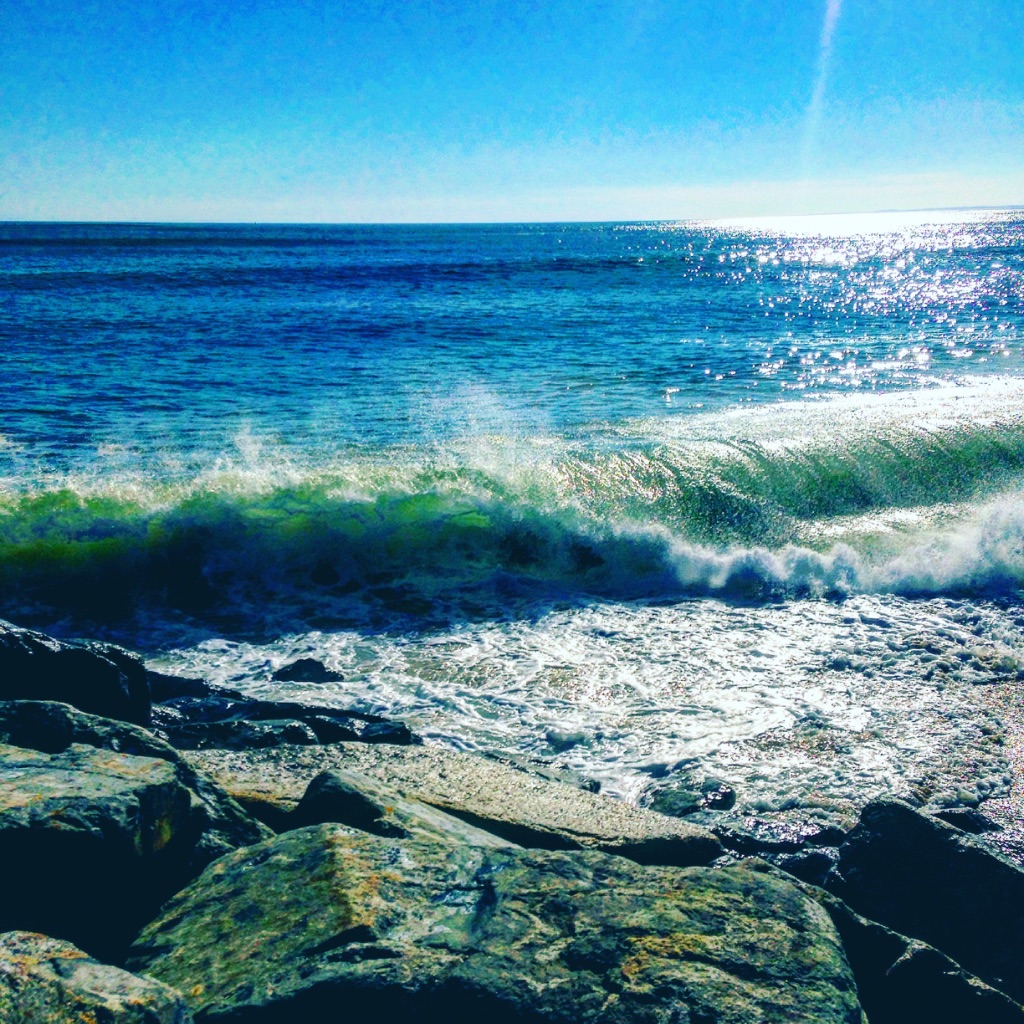
Growing up in New England, I learned from the Atlantic. The wild rocky shores taught me well. I loved exploring at low tide. The tide pools in the jetty of Wells Beach in Maine trapped gastropods, crustaceans, echinoderms, cnidarians and small fish. When you got ridiculously lucky you found baby elasmobranchs. (For you non-marine science people that basically means snails, crabs, sea stars, anemones, fish and things in the shark and ray family.) Seaweed, though smelly and itchy, showed me the secrets of marine life. I dove into the waves learning how they form, build, crash and the energy involved. The wind carried the scent of life, death, and minerals of the ocean. I used my senses to understand physics, chemistry and biology since I was a curious little girl.

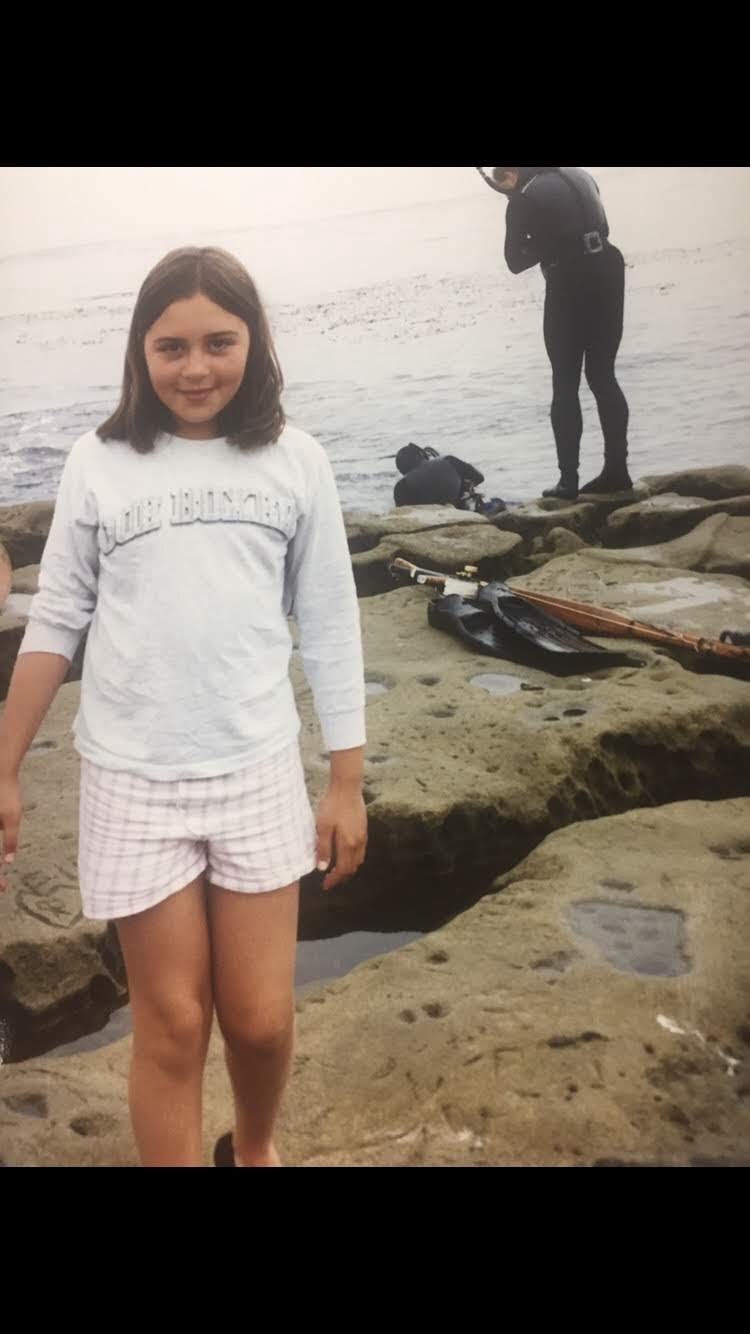
As I explored and learned on the east coast, I always recalled the vibrant colors of anemones in the rock pools of La Jolla. I remember the firs time I poked one and it recoiled within itself. It was dark purple, and the size of my head. We found a photo recently of me (in my pajamas on rocks) admiring some divers on the rocky cliff. The had neoprene covering their bodies and strapped weights to their hips and a spear gun resting on the rocks.

I’m such a creep, nothing has changed.
Pretty sure this was the first thing we did when we woke up.

My first memories of the ocean are what built the inner workings of my passion for the ocean. As I grow and learn, I can always think back to those bright orange fish. I thank my father for holding my hand over depthless waters and my mother for always being shore support. With out those opportunities and love in my life, I may have turned out very different.

Next Post: Driftwood Drive

Hello Mile High Mermaids!

My name is Molly Waters. I was born in San Diego, raised in Massachusetts and I live in Colorado. I have two degrees in Marine Biology and I am finding creative ways to use my education in a land locked state. Why the hell do I live here? Who the hell cares?

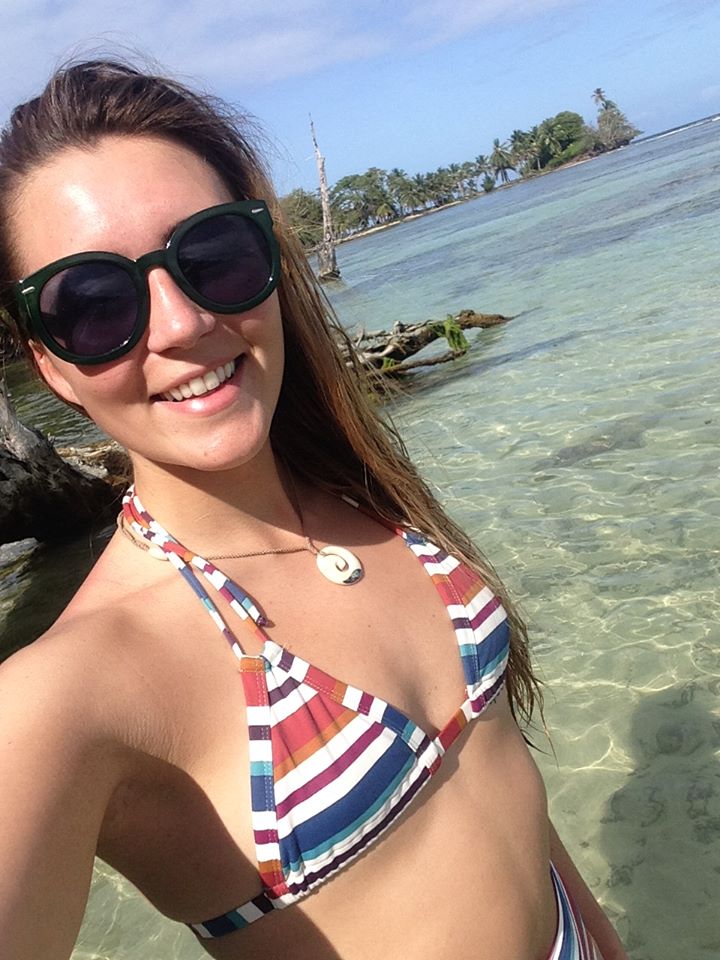
The photo below was during my masters program. We had one day off from diving and spent it on an island adjacent to Bocas Del Toro, Panama.

Why did I start a blog? Go get a job nerd!

Heres the thing, I walk dogs, I am a scuba instructor, and occasionally a professional mermaid. I’ve found that I really like giving young scientists advice. I’ve got a lot to say. I think my story past and present is interesting and worth diving into!

I’ve had several people virtually approach me asking for advice, clarification and ask general questions and I want to give that information to the public! I hope to tell stories, give advice, highlight scientific findings, and more! I’m hoping to connect with other marine scientists in a similar position.

Please join me on this journey, learn a little about life, fish and the ocean. I can’t wait to share my photos and pheelings!

Next blog post: My first real memory of ocean life in La Jolla, California.

Design a site like this with WordPress.com
Get started